

Why LVP and Impermeable Floors Are Causing Subfloor Damage in Crawlspace Homes
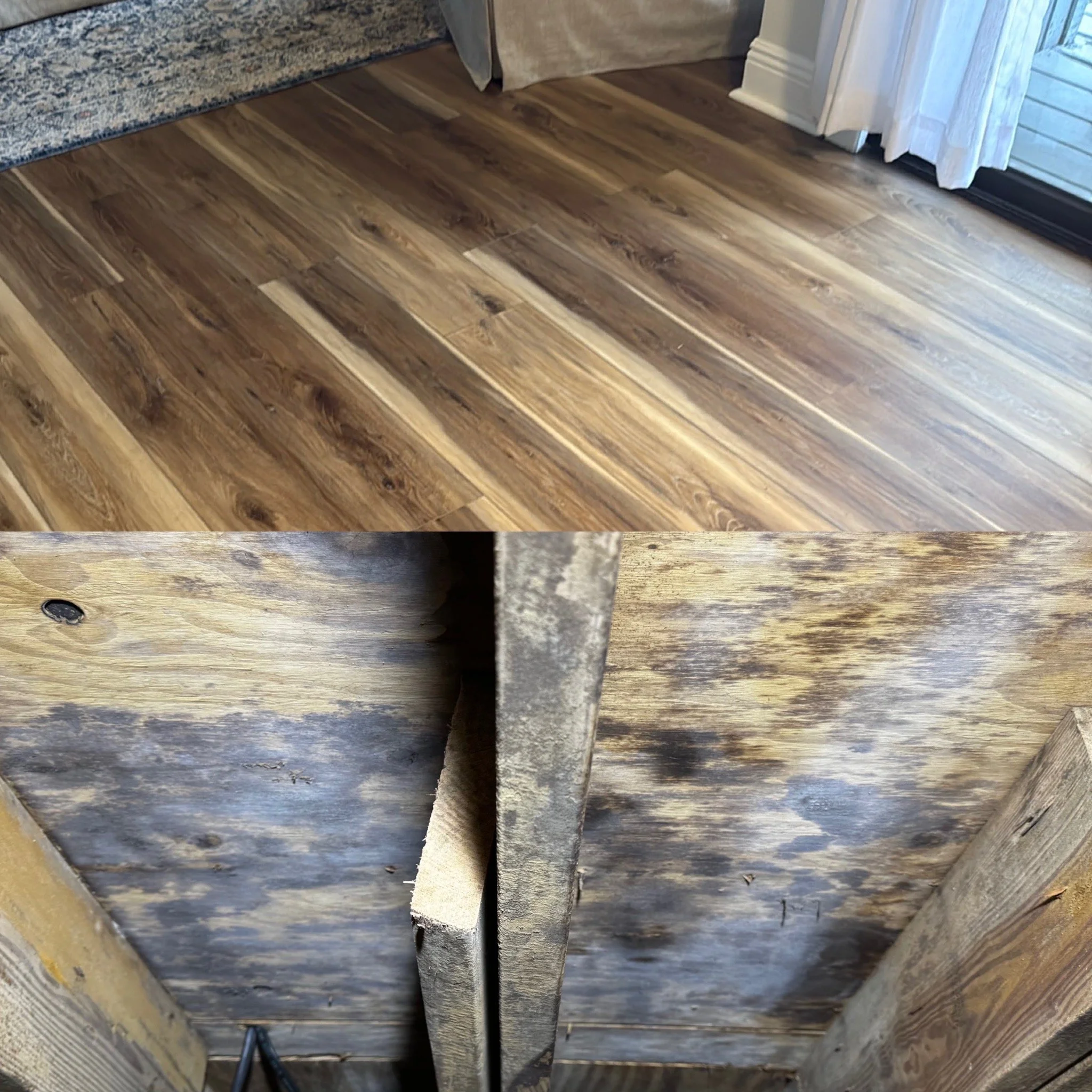
Luxury Vinyl Plank (LVP) has become one of the most popular flooring choices in modern remodels. It’s durable, waterproof, and budget-friendly. But for homes built over crawlspaces with moisture issues — especially older ones — installing an impermeable floor can unintentionally create a problem that leads to subfloor rot.
We’ve inspected numerous homes where newly installed LVP was sitting over a subfloor that was already soft, swollen, or beginning to fail. In many cases, the floor had only been installed for a short time. The common denominator: a damp crawlspace and a flooring system that simply cannot breathe.
How Moisture Moves in a Crawlspace Home
Crawlspaces are naturally humid environments. Moisture rises from the ground, moves through the foundation, and tries to equalize with the drier air above. If a crawlspace lacks a continuous vapor barrier, has poor ventilation, or holds water after storms, moisture will migrate upward into the subfloor.
In older homes, this didn’t always result in rot because the flooring systems were more forgiving. Solid hardwood floors — installed over asphalt felt or rosin paper — were actually semi-permeable. These materials allowed seasonal moisture to move through the floor assembly, and the wood itself acted as a moisture buffer. Even if humidity changed throughout the year, the system could breathe.
Why LVP Changes Everything
LVP is completely impermeable. Once it’s installed, it acts like a plastic moisture cap over the subfloor. If the crawlspace below is damp, and the subfloor is trying to release moisture upward, the LVP blocks that movement entirely. The subfloor becomes trapped between a damp crawlspace and a sealed flooring surface. This is where decay begins.
We’ve seen subfloors deteriorate in as little as 6–18 months under these conditions. OSB and plywood begin to soften and delaminate, fungal growth appears, and the flooring system loses structural integrity. What begins as a cosmetic upgrade can quickly turn into a major repair.
The Root Cause
It’s not the LVP itself — it’s moisture that has nowhere to go. Impermeable flooring over a wet or unconditioned crawlspace creates a moisture sandwich that accelerates decay.
How to Prevent This Problem
Before installing LVP — or any impermeable flooring — over a crawlspace, homeowners should ensure:
• A continuous 6-mil or thicker ground vapor barrier
• Proper drainage with no standing water
• Adequate cross ventilation, or a properly sealed/conditioned crawlspace
• Moisture readings on the subfloor below ~12%
• No plumbing or HVAC leaks contributing to humidity
Addressing moisture first protects the flooring investment and prevents structural damage that can be far more costly than the floor installation itself.
Final Thoughts
LVP can be an excellent flooring choice, but only when the crawlspace below is dry and stable. A quick remodel shouldn’t become a full subfloor replacement. If you’re planning to upgrade your floors, take the time to evaluate the crawlspace conditions before the first plank goes down.